
 Nederlands
 Español
 Français
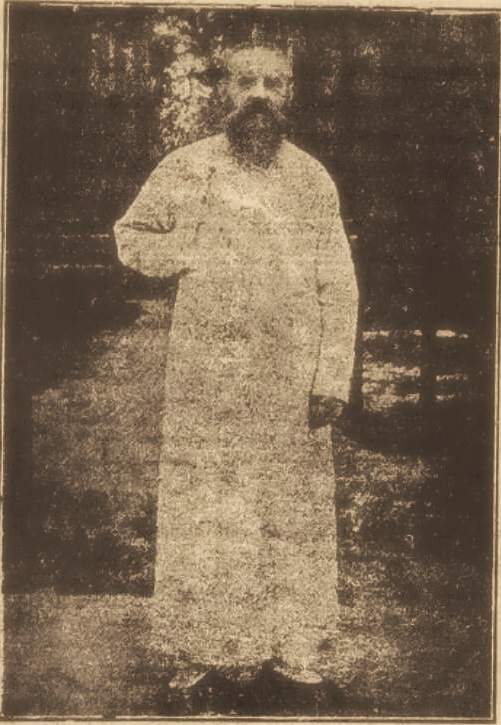
When Rev. Cyrille Van Lantschoot arrived in the United States in late 1926 on his way to Europe, he brought with him dramatic news from Mongolia and northern China. His account, published in Omaha, Nebraska, described the murder of priests, the looting of missions, and the violence that had spread through the region. Yet behind this dark news also stood another reality: the remarkable perseverance of the Catholic missions in Mongolia, where thousands of believers, catechumens, and orphaned children depended on the work of Belgian missionaries.
The Belgian mission in Mongolia
The treaties of 1858 and 1860 opened the vast interior of the Chinese Empire to Western missionary work. These missions were entrusted to the Apostolic Vicariate of Mongolia. Over time, three vicariates were established in the region: Southwest Mongolia in the Ordos area, Central Mongolia around Xiwanzi, and Eastern Mongolia in the region then known as Rehe or Jehol, today’s Chengde.
The Belgian missionary presence grew steadily. In 1888, after ten years of missionary activity, Alfons Bermyn became provincial superior of the Ordos mission. After his episcopal appointment in 1901, Yvo Stragier succeeded him. In 1905, the Ordos mission received a major reinforcement with the arrival of eight new Belgian missionaries, among them Father Cyriel Van Lantschoot of Bellem.
The departure for Mongolia in 1905
On 7 September 1905, eight missionaries embarked in Genoa, Italy, bound for Southwest Mongolia. They were Fathers Cyriel Van Lantschoot of Bellem, Gustaaf Capelle of Westrozebeke, Camiel Crabbe of Ostend, Maurits d’Haene of Lootenhulle, Cyriel Lefevere of Izegem, Louis Morel of Houthem near Ypres, Antoon Mostaert of Bruges, and Antoon Vinckx of Baerle-Hertog.
Van Lantschoot thus belonged to a generation of Belgian missionaries who entered the Chinese and Mongolian mission fields in the years following the Boxer Rebellion. Their work required endurance, language study, travel over vast distances, and the constant management of both spiritual and practical challenges.
News from a troubled region
During his visit to the United States, Father Van Lantschoot reported that two large churches and more than twenty mission stations with their equipment had been looted and burned. In August, two priests of the Apostolic Vicariate of Sui-Yuan were killed: one by bandits, the other by undisciplined military forces.
One of the most striking episodes concerned the mission at Sis-Wan-Tze. When bandits attacked, Father Lauwers confronted them at the door and asked what they wanted. According to Van Lantschoot’s report, they replied that they wanted his life first of all. The priest answered that they might take what they wished, but begged them not to molest the Christians. The marauders then killed him and proceeded to loot and burn the mission.
Another tragedy involved Father Ruyfellaer, a seminary professor at Sui-Yuan. While returning from an excursion with students, he was overtaken by soldiers. Motivated partly by anti-foreign bitterness and partly by greed for his belongings, one of the soldiers shot him. Father Ruyfellaer turned to face them and called to the students to flee. A second shot killed him, and one student who returned to assist him was also murdered.
Violence and perseverance
Father Van Lantschoot emphasized that such atrocities were caused by lawless soldiers and roaming armed bands in a China unsettled by disorder and insecurity. It was not only priests who suffered; ordinary country people were robbed, ill-treated, and murdered with even greater cruelty.
Yet despite the violence, he described the Church in the region as flourishing. In the Vicariate of Sui-Yuan alone there were 30,000 Catholics and nearly 20,000 catechumens preparing for baptism. The mission also oversaw eighteen orphanages directed by Chinese Sisters, caring for approximately 2,400 children.
Over half a century of missionary labor in Mongolia, around 200 priests of the Belgian Foreign Mission Society had died, many of them from typhus fever. This statistic underlined the hard conditions under which Belgian missionaries served, often far from home and exposed to illness, insecurity, and long isolation.
A first return to Belgium
By 1926, Father Van Lantschoot had been in China and Mongolia for nearly thirty years. The newspaper noted that this journey would be his first visit back to Belgium since he began his missionary work after the Boxer Rebellion. His stop in Omaha therefore represented more than a passing visit: it was a rare moment in which a Belgian missionary from the remote mission fields of Inner Asia could directly speak to an American audience about the dangers, sacrifices, and achievements of that world.
Historical significance
The 1926 report on Rev. Cyrille Van Lantschoot offers a vivid glimpse into the Belgian missionary presence in Mongolia and northern China. It connects local Flemish origins, international Catholic missions, political unrest in China, and the personal endurance of missionaries who spent decades far from home. For the Van Lantschoot family story, it places one of its members in a much wider global history.
Source: The Catholic Advance, Saturday, December 4, 1926, Omaha, Nebraska; online access noted via Newspapers.com.