
 Nederlands
 Español
 Français
Charles (Karel Lodewijk) Roegiers 1910 – 1944
The Ardennes Offensive, known as the Battle of the Bulge, was the last great German attack on the Western Front in World War II. Launched on 16 December 1944 through the snowy forests of Belgium and Luxembourg, it aimed to split the Allied armies and seize Antwerp.
In the first violent days of the campaign, many American units were overwhelmed, roads and villages became battlefields, and places such as Bastogne and Consthum entered history.
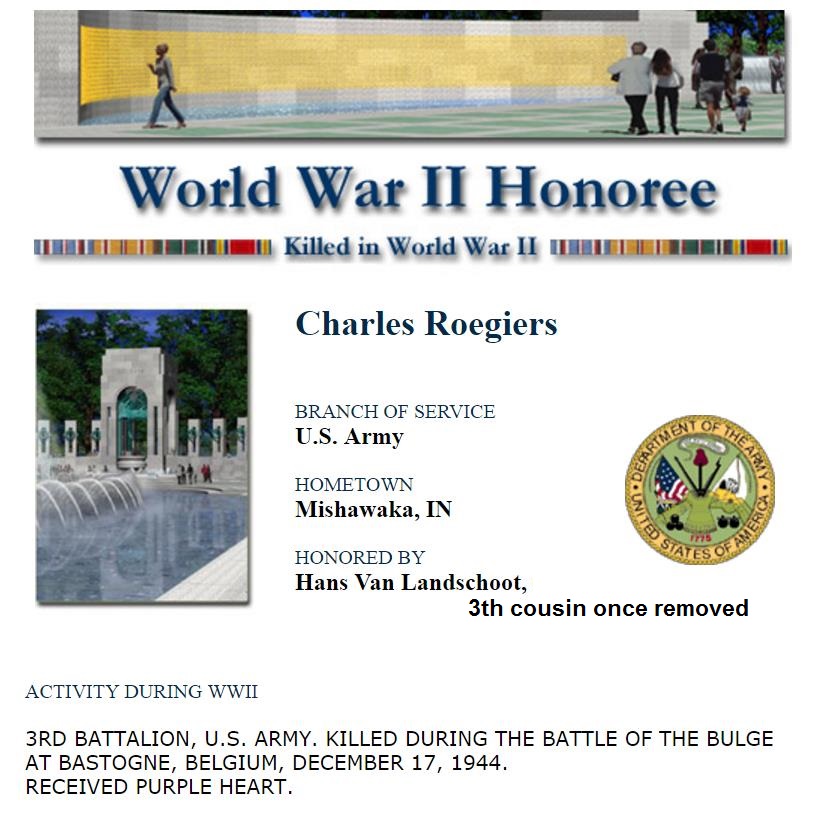
It was in this dramatic opening phase that Charles Roegiers was killed in action on 17 December 1944.
Charles (Karel Lodewijk) Roegiers was born in Eeklo, Belgium on 11 September 1910, the son of Victor Roegiers and Delphina Van Landschoot. Like many families from the Meetjesland region in the early twentieth century, the Roegiers family became part of the great migration to the United States.
On 23 October 1920, Charles travelled with his mother Delphina, his brother Peter and his sister Hortense to New York aboard the famous liner SS Mauretania. His father Victor had already emigrated several years earlier, arriving in America on 3 November 1913. The family eventually settled in the industrial Midwest, first in Pottersville, Michigan, and later in Mishawaka, Indiana.
Despite their new life in America, the ties with their birthplace remained strong. In 1935, Charles returned to Belgium together with his mother and sister Hortense to visit relatives in Eeklo. After several months they returned to the United States, sailing from Europe on the ship President Harding and arriving in New York on 11 December 1935.
When the Second World War erupted, Charles joined the United States Army. He served as a Private First Class in B Battery of the 447th Anti-Aircraft Artillery Automatic Weapons Battalion, which supported units of the 28th Infantry Division of the U.S. First Army.
The battalion landed in Normandy shortly after the Allied invasion. On 7 June 1944 (D-Day +1) his unit came ashore near Saint-Laurent-sur-Mer on Omaha Beach, one of the most fiercely contested sectors of the Normandy landings.
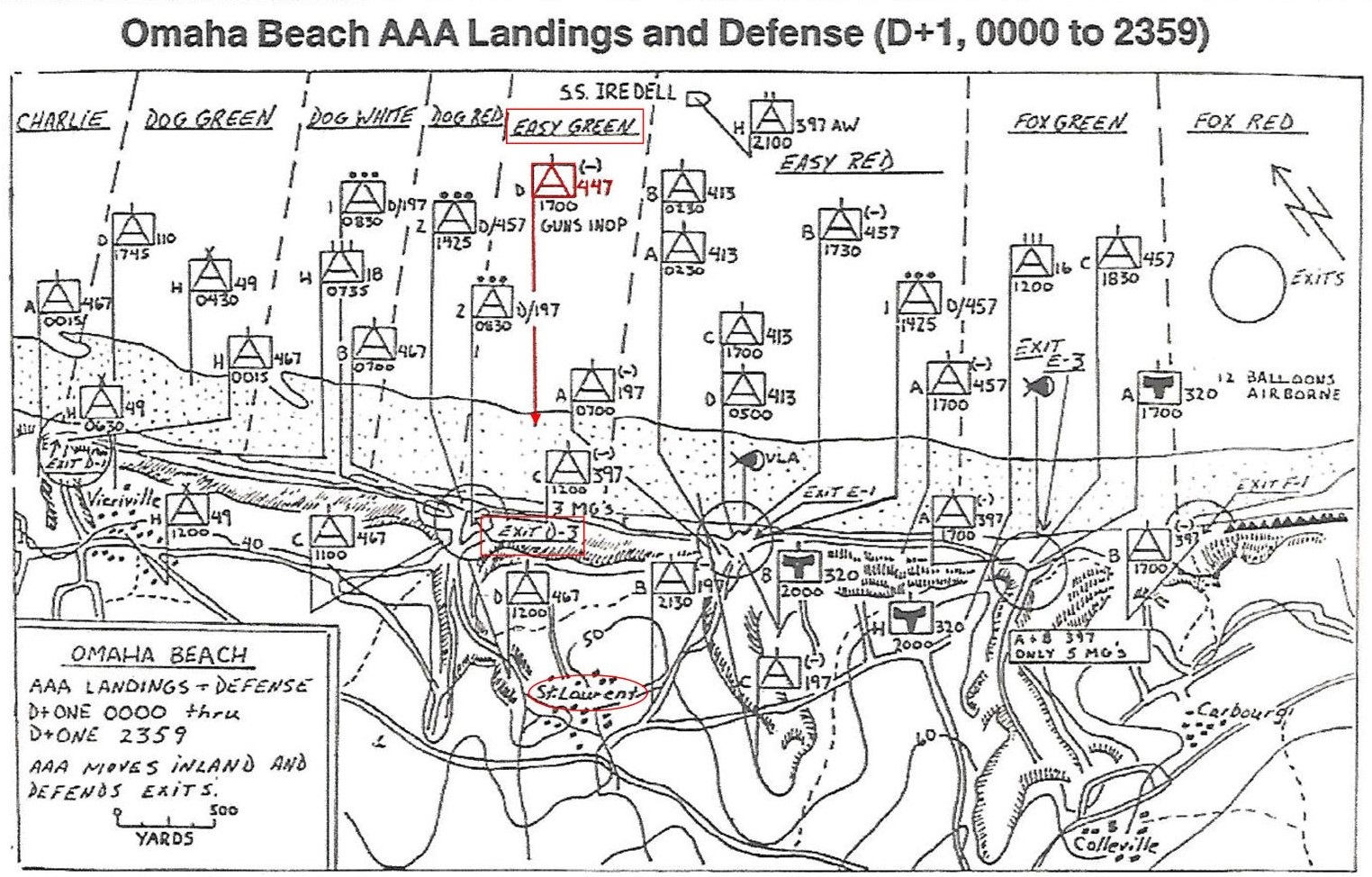
During the winter of 1944 the German army launched a massive counter-offensive through the Ardennes, known as the Battle of the Bulge. On 17 December 1944, only one day after the offensive began, Charles Roegiers was killed in action near the village of Consthum in Luxembourg, about twenty-five kilometres east of Bastogne.
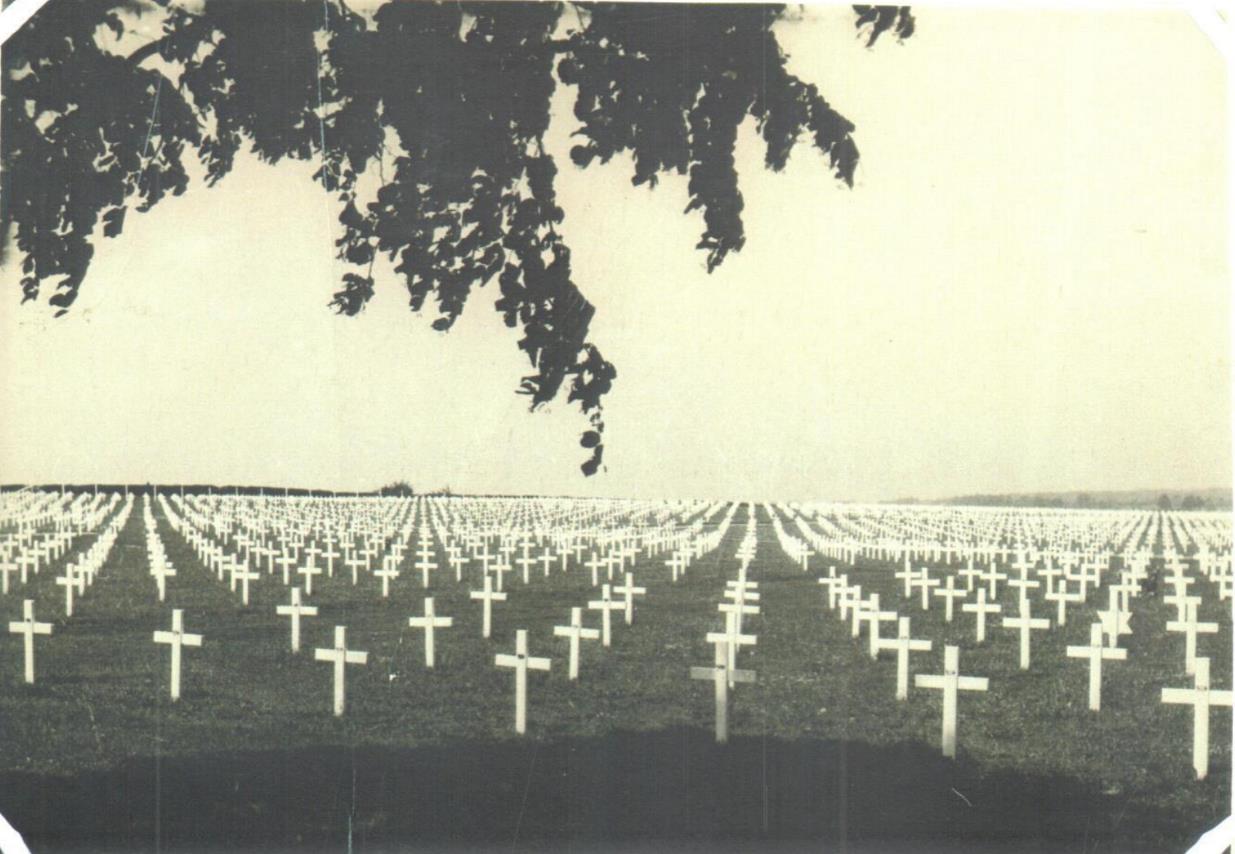
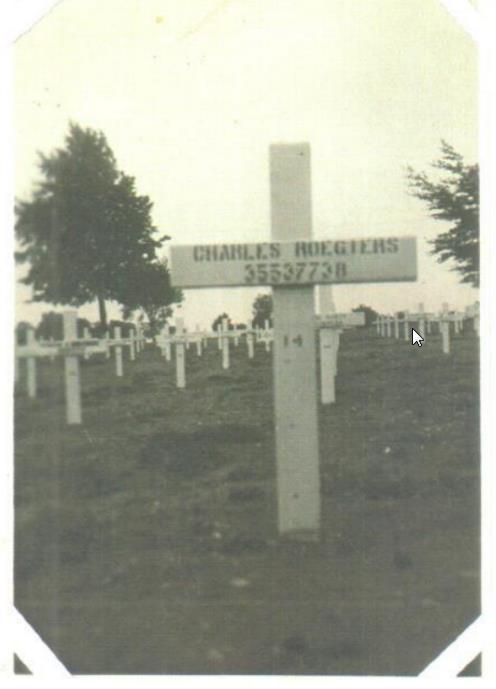
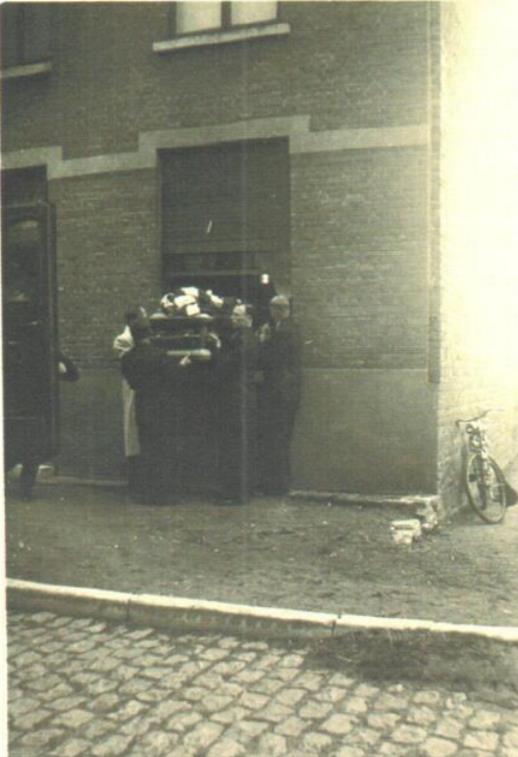
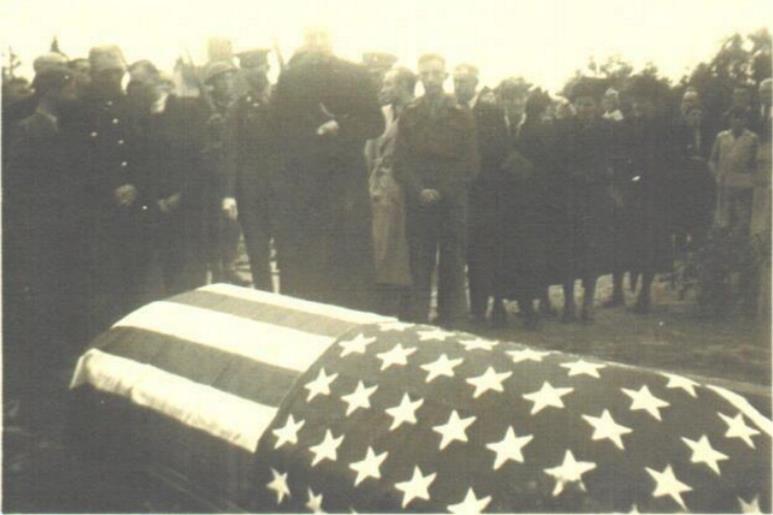
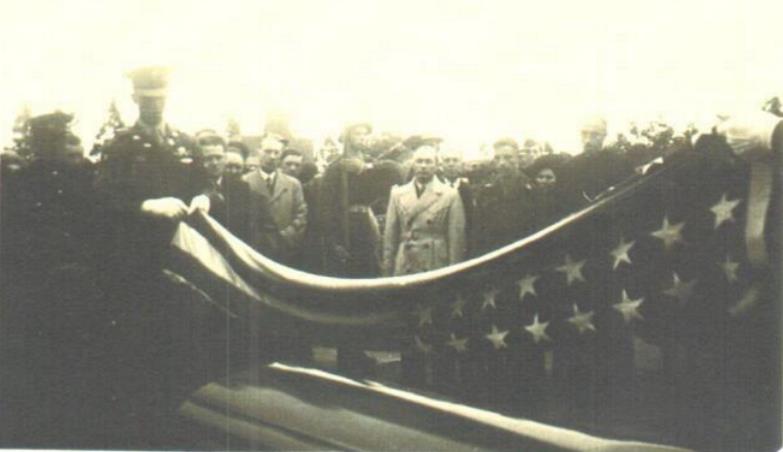
>He was initially buried in the Henri-Chapelle American Cemetery near Liège together with many other American soldiers who fell during the liberation of Belgium. After the war the family chose to bring him back to his birthplace. On 13 August 1948, Charles was reburied with military honours at the municipal cemetery of Eeklo.
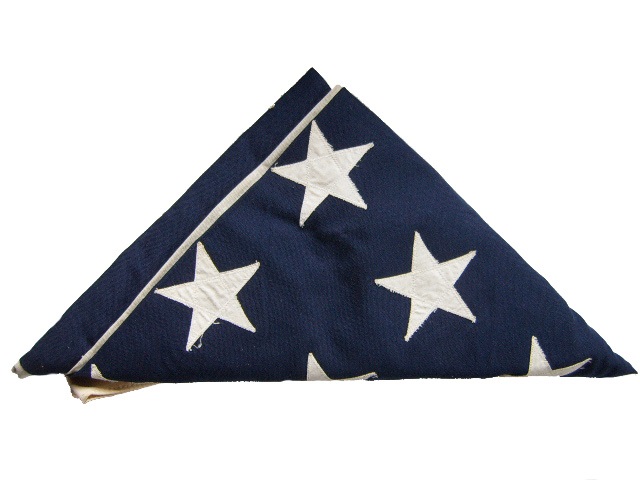
The folded American flag that covered his coffin was preserved by the family and remains a treasured remembrance of his sacrifice.
His final days
In 1944, from a small hamlet in the region of Bastogne, Charles wrote a long and cheerful letter to his brother René in Eeklo. At last he was stationed in Belgium, the land of his birth, and he hoped that in the coming weeks — perhaps even by Christmas — he would be able to visit Eeklo and see the family again. He looked forward with hope to that reunion.
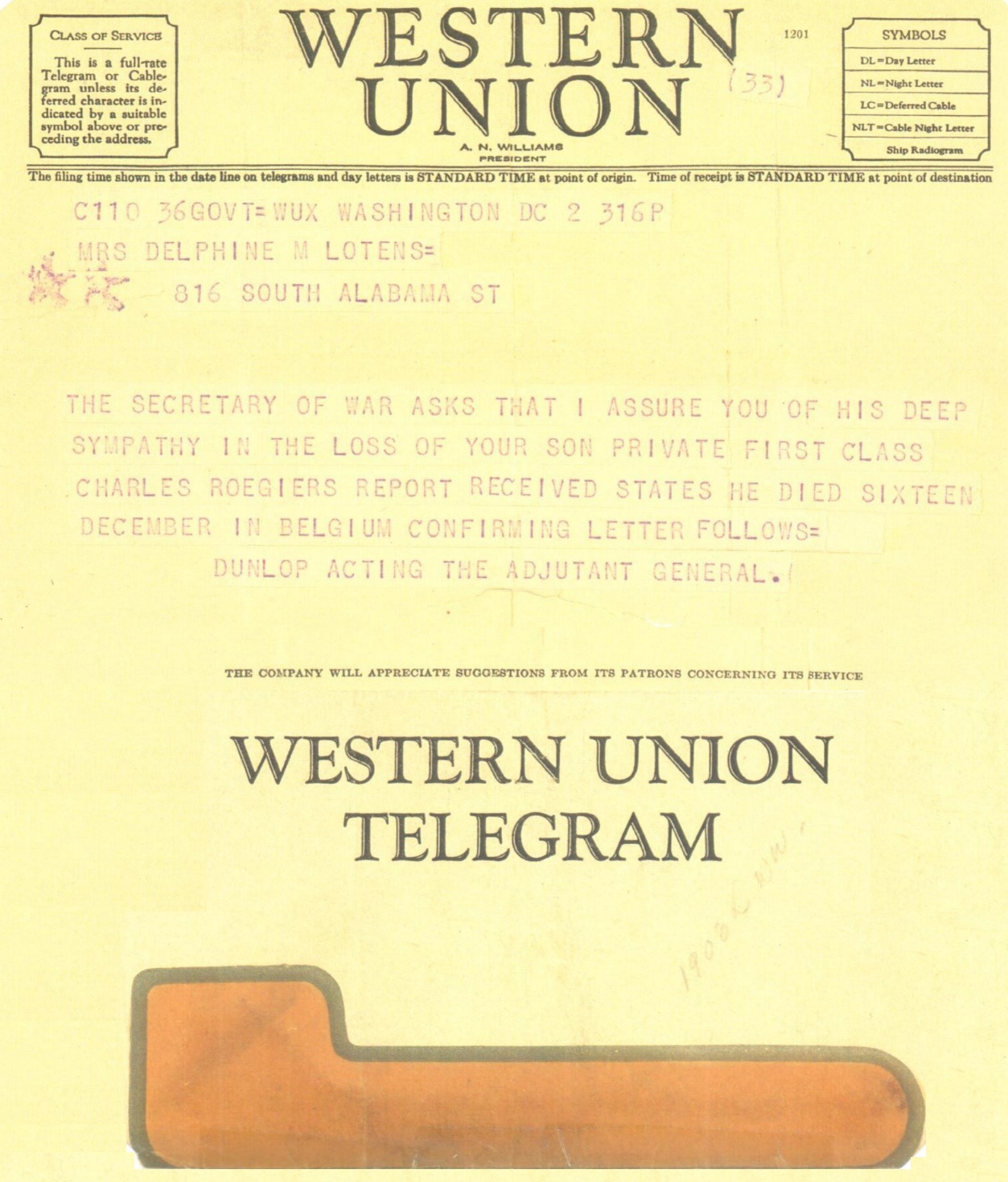
It was not to be. On the cold, dark and brutal winter day of 16 December 1944, the German army launched its great offensive through the Ardennes. Charles was not at the very point of the first assault, but when he understood the seriousness of the situation, he volunteered to help reinforce the hastily formed defensive lines. That decision became his fate. Only a few hours after being committed to the fighting, he was struck by deadly German fire and was laid down with care near the edge of a forest somewhere in the Bastogne region.
A field chaplain later wrote to his mother that her son had been gravely wounded. After receiving the last sacraments, he died calmly and with resignation, holding the small crucifix of his rosary in his hands. That image remained one of the most moving testimonies connected with his death.
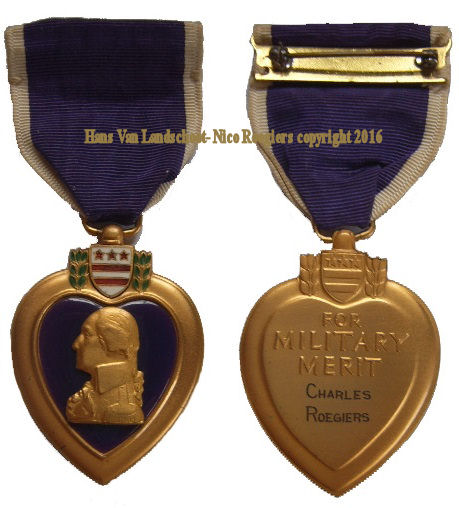
In 1952, Mrs. Roegiers, the mother of the fallen soldier, came back to Belgium. Her first visit was to the grave of her beloved son. It took her more than a year before she could finally decide to return to the United States. When she eventually left, she entrusted the posthumously awarded Purple Heart of Private Charles Roegiers to relatives in Eeklo.
In 1974, the eldest brother of the fallen soldier died in Eeklo. As treasured family possessions, he left the American flag and the high military decoration to his two children, Marguerite and Marcel. After careful reflection, they decided to donate both cherished memorial objects to the organisation Soldatengraven 1939–1945 over de gehele wereld.
Charles Roegiers is remembered as a man who fell on the field of honour because he simply did what was expected of him: his highest duty. His sacrifice calls not only for remembrance, but also for peace and reconciliation across borders.
Letter from the Headquarters Office of the Chaplain
447th AAA AW Battalion – APO 230 U.S. Army
To Mrs. Delphine M. Lootens, 816 S Alabama Street, Mishawaka, Indiana
Dated 26 February 1945
Since the War Department had already notified Charles Roegiers’s mother of her son’s death, the battalion chaplain wrote to confirm the sad news and to offer spiritual consolation. He explained that Charles, Private First Class of B Battery, had been killed in action in Luxembourg on 17 December 1944.
The chaplain added a deeply personal detail: when he came to attend him, he noticed that Charles wore a small crucifix around his neck. He wrote that he could not help thinking of Charles’s death as a sacrifice offered for the liberty of others. In his words, the young soldier’s death was not meaningless, but part of the great struggle for the freedom of his fellow men.
The letter continued in a tone of sincere sympathy and Christian hope. The chaplain assured the family that Charles would continue to be remembered at Mass, and he reflected on death as only a temporary separation, until those who love one another are reunited again.
He ended by placing Charles’s mother under the care of the Blessed Virgin Mary, asking that she might receive the grace and strength to bear her sorrow with patience and resignation.
Signed: Leonard C. Paprecy, Chaplain, U.S. Army
Commemoration
For many years the grave of Charles Roegiers in Eeklo was little known outside the family. In recent years the American Overseas Memorial Day Association (AOMDA) has included his grave in its annual commemorations of American soldiers who died during the liberation of Europe.
During Memorial Day ceremonies a delegation visits the cemetery in Eeklo, places flowers on the grave, and honours his memory with the American and Belgian national anthems, the sounding of the Last Post, and a minute of silence.
Today Charles Roegiers stands as a symbol of the transatlantic history shared by many Flemish families: born in Belgium, raised in America, and ultimately returning to Europe as a soldier in the struggle for liberation.
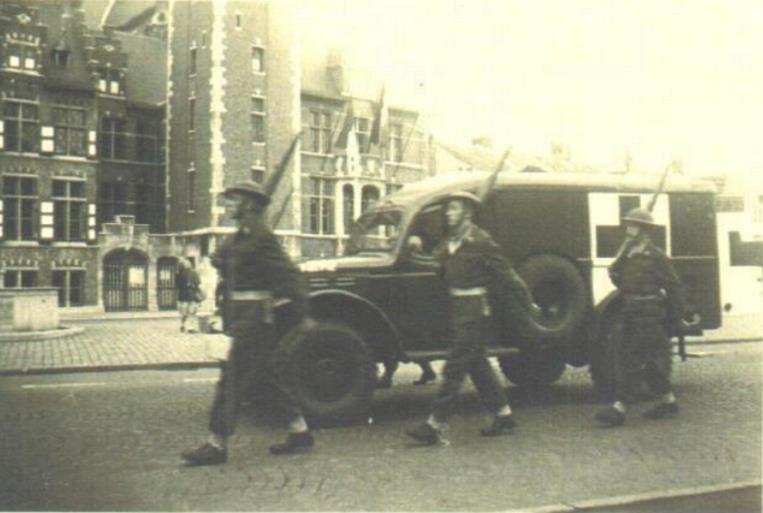
Photographic record
Acknowledgement
Special thanks to Nico Roegiers, a family relative of Charles Roegiers who lives in Eeklo, for generously sharing family photographs and documents.
These personal images, preserved within the family for decades, made it possible to reconstruct the story of Charles Roegiers and to illustrate his life, service and sacrifice.
Without his collaboration and willingness to share these memories, this page and the historical record presented here would not have been possible.
“The photographs remain part of the Roegiers family archive.”
Sources
Family archive Roegiers – photographs and family documents courtesy of Nico Roegiers
American Overseas Memorial Day Association (AOMDA)
U.S. Army service context – 447th AAA AW Battalion
Chaplain letter from Headquarters Office, dated 26 February 1945
George E. Spittael, with additions and corrections by Hans Van Landschoot, 29 May 2016
Fulton History and related commemorative documentation
Kurt De Sutter, Waarschoot (map of Omaha Beach)